


I turn left down a paved road I’ve always passed by. The sky is the color of exhaust, the plateaus to the north a soft red and cream. Aside from a pinprick sized semi-truck in the distance, I am alone. I have time.
There’s a crusty pickup truck on a wide dirt lot to my right. An empty vehicle left in the desert is always one of two mysteries, a “what went wrong” or a “what did they find.” Sometimes I slow down and crane my neck to try to solve it. This time, I keep my pace.
The eighth Emma M. Lion audiobook is playing in my car. I’m on the chapter where Vicar Hawkes steps into the fighting ring on May Day to pummel the strongman out-of-towner who’s cheated his way to victory, the women of Saint Crispian’s flushed at the sight of so much bare male skin. I’m so rapt in the story, I almost don’t see the reaper-red face of a turkey vulture in the street before it’s too late. I brake, I swerve, it lifts its dark weight into the sky. I watch it fly over a hay field and will it to come back as I catch my breath. It’s lucky to be alive. I want to see the way it interfaces with death. I want to see the flesh hanging from its beak.
I’ve always found this aspect of myself to be funny and slightly bizarre, that I love teacup, corset, and bonnet formality as much as I love the macabre. That part of me loves what is refined and controlled and part of me loves what is wild. It’s perhaps, in every instance, the defining pursuit of my life, choosing between the two.
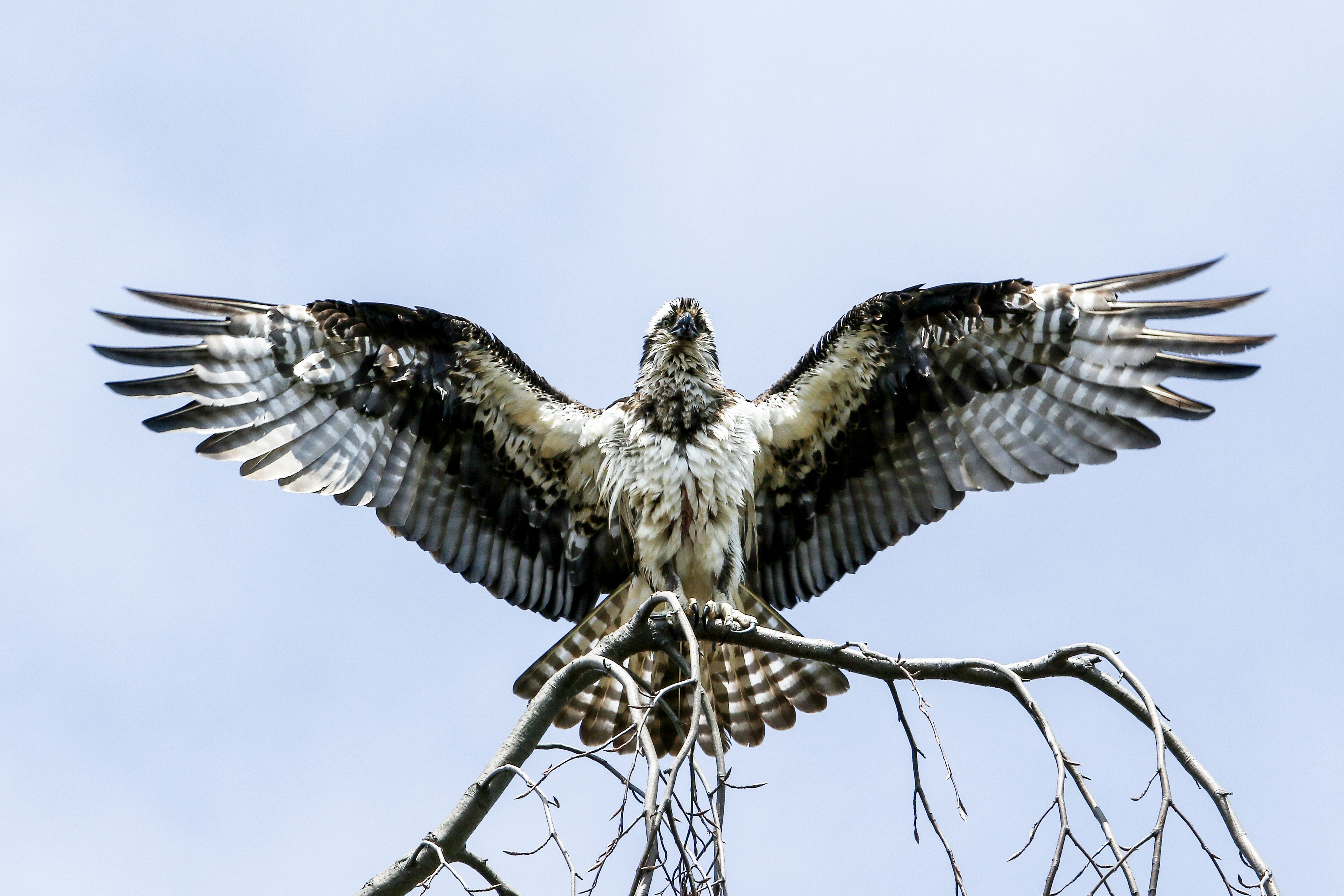
I’m driving and listening to my book again. One moment there are empty fields. The next, I’m cutting through red rock into the belly of a valley with a large marshy lake. I take the sign towards the Ouray National Wildlife Sanctuary, a place I’ve never been. Before I’ve even entered the sanctuary, two things occur consecutively: I see an osprey peering over the edge of a large nest atop a pole and my “check brakes” symbol blinks on my dash.
I’m yanked back out of Saint Crispian’s and into Leota, Utah, where the yards are dusty, all dogs are to be bewared, ducks chatter in the cattails, and a prey bird cocks its head at me as I pull over and rifle through my car manual to figure out how much time I have to get to a mechanic before I’m royally screwed. The osprey has flown to a nearby tree, wary but protective of its roost. It’s joined by another. I’ve never seen two together. Ospreys always strike me as wildly solitary.
It’s a Sunday. The closest, open mechanic is in Heber, two hours away. Caution forces me to turn around, drive slow. I don’t reach the wildlife refuge. I watch the ospreys grow smaller and smaller in my rearview. I wish, not for the first time, that I could be a bird. That I could see where every single path leads and choose them all.
That I could land somewhere and it was still natural to fly.